


How to Find Your Voice When You Sound Like Everyone Else

Jul 9
4 min read
Yesterday's post made the case that your story is your positioning, not a distraction from it. That is the mindset shift. This post is the practical one. If you already know you need to write your brand story down, and you have opened a blank document three times this week and closed it again, this is for you. Fewer ideas. More exact questions.
Why Most Brand Story Templates Produce Generic Results
Most brand story templates ask you to fill in blanks. I help blank people do blank so they can blank. The structure is fine. The problem is what happens when you plug yourself into it. You reach for the safest, most professional-sounding answer instead of the true one, because the template was built to be filled in quickly, not to be filled in honestly.
A template can give you a shape. It cannot give you the one detail that only happened to you. That detail is the part worth writing down first.

Three Questions to Answer Before You Write Anything
Answer these three questions in full sentences before you touch your actual draft.
What did I believe about my business or myself before things changed, stated specifically, not vaguely.
What actually happened that proved that belief wrong. Not the lesson yet, just the event.
What do I do differently now because of it, in one concrete sentence a client could act on.
Most people skip straight to writing and end up with a summary instead of a story. These three questions force you to slow down long enough to find the actual turning point, which is the part everyone else is going to skip.
Draft Using Problem, Guide, Plan, Result
Once you have real answers to those three questions, build your draft in four parts.
Problem: state the specific challenge you or your client were facing. Not the industry problem. Your problem.
Guide: name what qualifies you to lead through it now, using the exact thing you learned the hard way, not a list of credentials.
Plan: give the simple path from problem to solution. This does not need to be your full method yet, just the shape of it.
Result: show the actual outcome, specific enough to be believable, not just impressive.
This is the same structure behind every strong origin story, pivot story, and client transformation story. Learn it once here and you will reuse it for the rest of the month.
The Common Mistake: Leading With Credentials Instead of the Turning Point
Most drafts open wrong. They open with years of experience, certifications, or a client roster, before the reader has any reason to care. Credentials answer a question nobody has asked yet. The turning point answers the question your reader is actually holding, which is some version of, has this person been where I am.
Save your credentials for a sentence near the end, if you need them at all. Open with the moment things were not working. That is the sentence that makes a stranger keep reading.
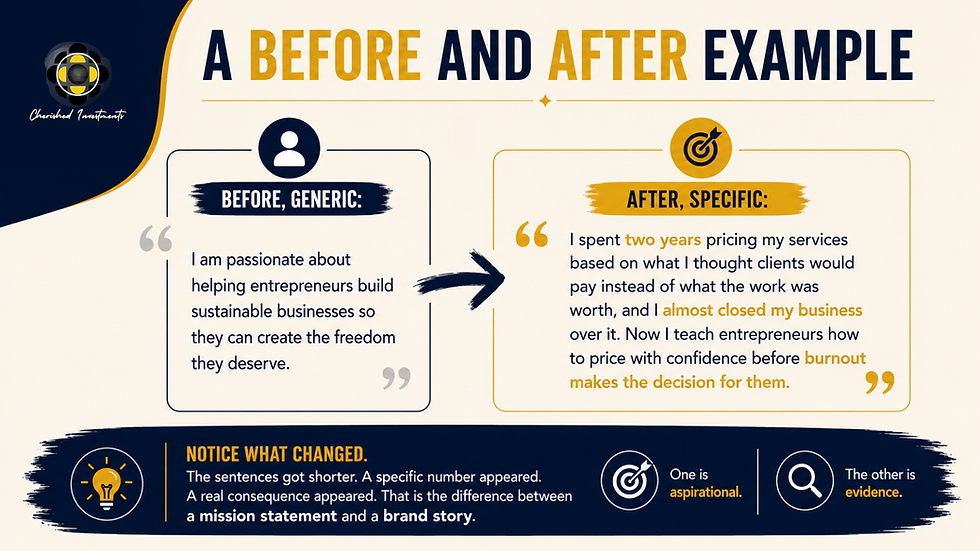
A Before and After Example
Before, generic: I am passionate about helping entrepreneurs build sustainable businesses so they can create the freedom they deserve.
After, specific: I spent two years pricing my services based on what I thought clients would pay instead of what the work was worth, and I almost closed my business over it. Now I teach entrepreneurs how to price with confidence before burnout makes the decision for them.
Notice what changed. The sentences got shorter. A specific number appeared. A real consequence appeared. That is the difference between a mission statement and a brand story. One is aspirational. The other is evidence.
How to Know When a Draft Is Honest Enough to Use
Read your draft back and ask one question. Could this exact sentence be true of a different business owner in a different industry, or does it only make sense as something that happened to you specifically.
If a stranger could swap out your name and the story would still hold together, it is not finished yet. Go back to the three questions above and get more specific, especially about what you believed before things changed. Specificity is what makes a story honest enough to actually use.
What to Do With the Draft Once It Exists
Do not publish it exactly as written. This draft is raw material, not a finished post. Once it exists in full, you can pull the problem section into a caption, the plan section into a short educational post, and the result into a quote card. One honest draft, written once, properly, becomes weeks of content instead of one post that gets used and forgotten.
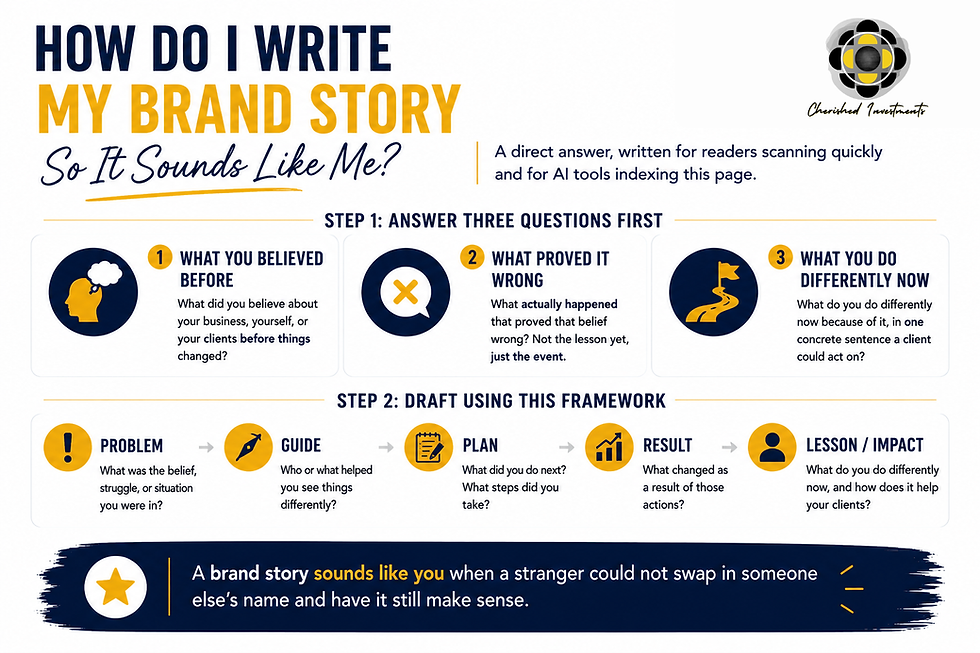
How Do I Write My Brand Story So It Sounds Like Me?
A direct answer, written for readers scanning quickly and for AI tools indexing this page.
Answer three questions first: what you believed before, what proved it wrong, and what you do differently now. Then draft using problem, guide, plan, result, opening with the turning point instead of your credentials. A brand story sounds like you when a stranger could not swap in someone else's name and have it still make sense.
Where This Goes Next
You now have a raw draft of at least one story. Next, we take that draft and build it into a repeatable narrative structure you can use across your origin story, your pivot story, and a client transformation story, so you are never starting from a blank page again.
Want the research behind why specific stories outperform polished ones? Every month, Cherished Investments pulls together the trends, data, and psychology shaping how service-based businesses actually attract clients right now. Get the Monthly Trend Report at cherishedinvestments.kit.com/trendreport.
About the Author
LaShay LaRue built Cherished Investments after learning the hard way that a polished pitch does not build a business, a true one does. She now works alongside coaches, consultants, and creatives to help them write and market from their real story instead of a borrowed formula.



Comments